
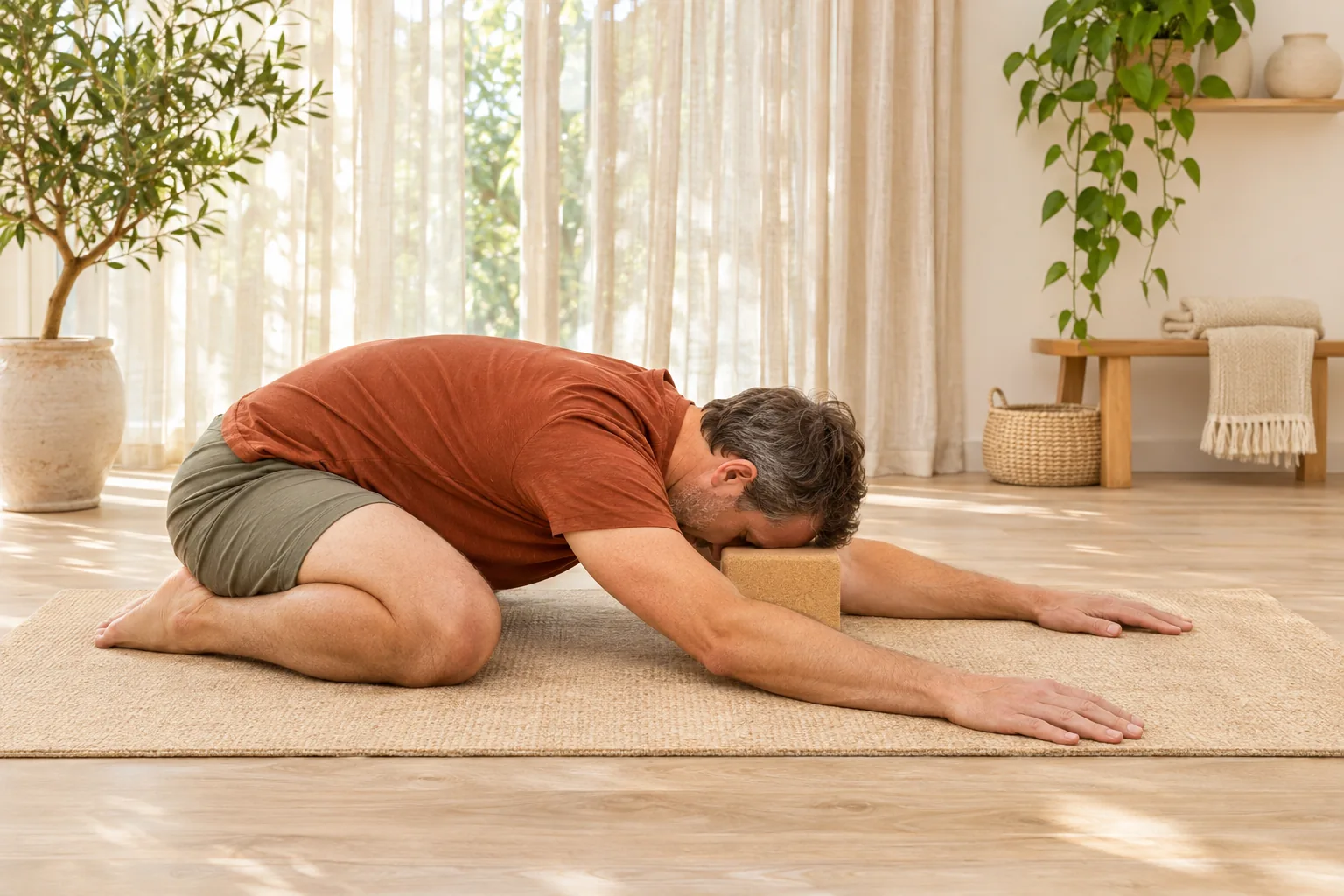
Your step-by-step routine
Warm up before the longer holds
Spend five minutes walking easily around your room or marching gently beside the chair. Let the arms move naturally, then gradually make the steps a little more purposeful without becoming breathless. If you do not feel ready to stretch after five minutes, continue easy movement and extend the session.
The six stations take twelve minutes, including their position changes. Finish with three minutes of quiet sitting or comfortable lying, then get up gradually. This is one set of each station, not a circuit to rush through twice. For a broader introduction before focusing on flexibility, use yoga for complete beginners or visit the yoga hub.
1. Chair-supported puppy shape
2 minutes: two 20-second holds, with 20 seconds upright between them and 60 seconds total for setup and exit.
- Face the secured chair and place your hands on its back, about shoulder-width apart. Step backward until your arms can lengthen comfortably.
- Bend your knees slightly and send your hips back. Let your chest move only a little lower between the arms without forcing your head down.
- Stand closer to the chair to come out, pause upright, and repeat once.
Make it easier: Place hands against a wall at chest height instead. Keep your trunk more upright and your elbows slightly bent.
Watch for: Some weight travels through the arms here. Do not hang heavily from the shoulders, arch the lower back or use a chair that could tip.
2. Supported low lunge
2 minutes: one 20-second hold on each side, with 80 seconds available for kneeling, side changes and rest.
- Kneel beside the chair on a folded blanket and bring one foot forward. Hold the chair lightly and keep the front foot fully grounded.
- Bring your trunk upright and shift forward only slightly, keeping your ribs above your pelvis. Look for a mild stretch at the front of the rear hip.
- Shift back before changing legs. Use the chair for balance rather than pushing yourself into a deeper lunge.
Make it easier: Skip kneeling and use a short standing split stance with hands supported, allowing only a small forward shift.
Watch for: The lunge uses leg effort as well as stretching. Do not force the rear hip forward or continue through pressure on the kneecap.
3. Reclined strap-assisted leg raise
2 minutes: two 20-second holds per leg, with four 10-second intervals to lower or switch.
- Lie on your back with both knees bent and feet down. Loop a strap around the broad middle of one foot, holding an end in each hand.
- Lift that thigh toward you and gradually lengthen the knee only until you feel a mild pull behind the thigh. The knee may remain quite bent.
- Keep elbows relaxed, lower the leg fully between holds, then switch. If you have no strap, support behind the thigh with your hands instead.
Make it easier: Keep the lifted thigh farther away or use more knee bend. Leave the other foot down rather than extending that leg.
Watch for: Do not yank the strap, lock the knee or lift your head to reach. Stop for tingling or discomfort behind the knee.
4. Reclined figure-four shape
2 minutes: one 30-second hold per side, with 60 seconds total for setting up and changing legs.
- Remain on your back with knees bent. Rest the outside of your right ankle across your left thigh, above rather than directly on the knee.
- Keep the left foot grounded and let the right knee settle outward only as far as it naturally goes. The right foot stays gently active.
- Uncross fully before changing sides. You may feel a mild stretch in the outer hip without lifting the supporting foot.
Make it easier: Rest the crossed ankle closer to the opposite shin, or omit crossing and simply let one knee open slightly with the foot still grounded.
Watch for: Never push down on the raised knee. Skip this shape if crossing the leg creates knee pressure or conflicts with individual hip restrictions.
5. Reclined supported chest opening
2 minutes: two 30-second holds with 30 seconds of arms-at-sides rest after each.
- Keep your back on the mat and your knees bent. Open your arms to a low, comfortable angle with palms facing upward.
- Allow the arms to rest where they land without pressing them into the floor. Place folded towels beneath the forearms if needed.
- Bring the arms beside you between holds. Keep your ribs quiet rather than lifting your chest into a large arch.
Make it easier: Keep elbows close to the body and bend them comfortably. Raise your arms less or remain with hands resting on your abdomen.
Watch for: A front-of-chest stretch should not become shoulder-joint pinching or hand tingling. Support the arms or stop the position.
6. Supported seated forward hinge
2 minutes: two 20-second holds, with 20 seconds upright between them and 60 seconds for getting seated and resting.
- Roll to your side and come up slowly, then sit on a folded blanket. Extend your legs loosely with generous knee bend.
- Rest hands on your thighs and tip forward a small amount from the hips. Stop before you need to round deeply or strain to sit.
- Return upright between holds. Keep the knees bent throughout rather than straightening them as a measure of progress.
Make it easier: Do the hinge sitting on the chair, with one heel forward and the other foot grounded. A tiny forward movement is enough.
Watch for: Do not pull on your feet or use a strap to drag your trunk forward. Skip spinal bending if you have been advised to avoid it.
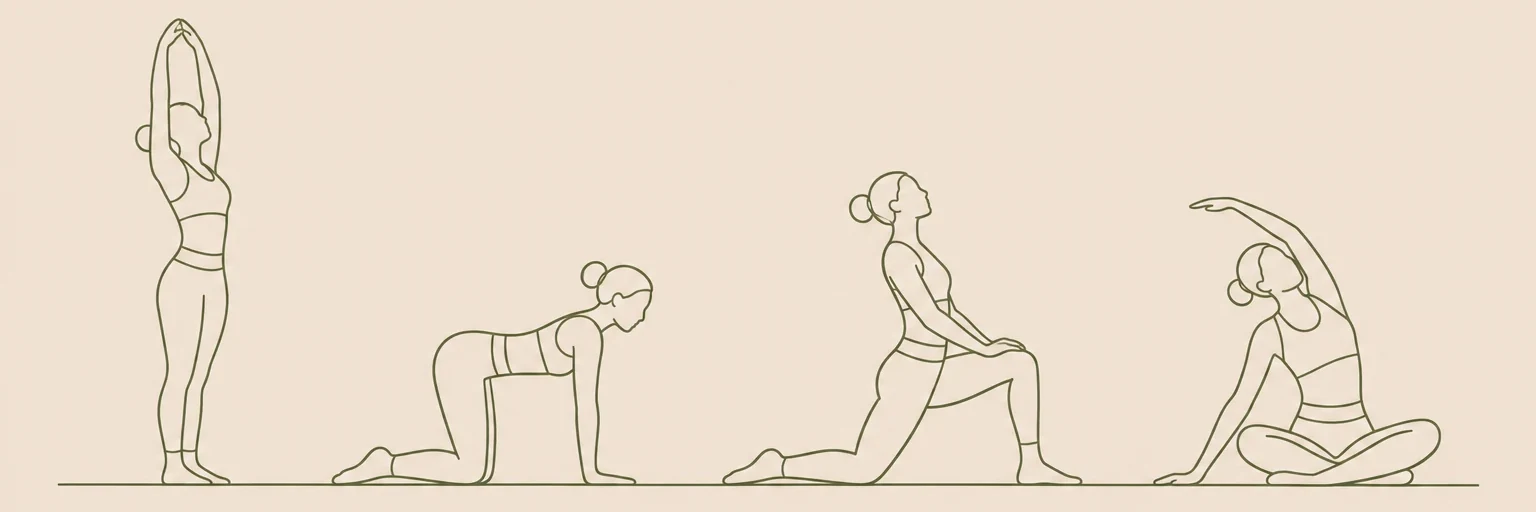
Illustrations are for orientation, not a depth or flexibility target.
How much stretch is enough?
Choose mild tension rather than the strongest sensation you can tolerate. A hold is not improved by bouncing, having someone press you farther, or pulling harder on a strap. Ease out slightly if you start gripping your jaw or holding your breath. The supported shapes still count when your range looks small.
Most floor holds here are relatively passive: your support and gravity do much of the work. The chair-supported puppy and low lunge also load the arms or legs, so treat fatigue as a reason to reduce the position, not to sink deeper. Flexibility practice is different from a strength session and does not replace one.
Build a repeatable practice without chasing depth
Try this sequence two or three days a week and keep the same hold lengths at first. Useful notes include which support you used and whether you could breathe easily, rather than how many inches you reached. There is no promised timeline for touching your toes or changing a particular pose.
Stop for sharp pain, joint pinching, tingling, numbness or dizziness. Chest discomfort or unusual breathlessness calls for ending exercise and seeking appropriate help. Seek individual advice when an injury, operation, pregnancy or health condition affects movement. If floor transfers are the obstacle, chair yoga for beginners offers an entirely seated alternative.
Frequently asked questions
Can stiff beginners start yoga?
You do not need a particular reach to start these modified positions. Begin with a small range, generous support and only the shapes you can enter and leave comfortably.
Should I stretch before or after a workout?
Avoid using long, deep holds as your only warmup. This sequence begins with easy movement and can also fit after light activity when you are already warm; keep it gentle either way.
Will doing more sets make progress faster?
Extra sets are not required for this routine and do not guarantee faster changes. Start with the single planned set, assess how you feel later, and avoid increasing both depth and duration at once.
Keep exploring yoga
Find more in our yoga guides, or make the timing your own with the routine builder.
Sources & context
These references inform general movement and safety guidance. The sequence and timings are editorial suggestions, not an individually prescribed program.